Hedwige Chrétien
Composer
Biography
Study event exploring the life and work of Hedwige Chrétien.
Filmed in 2022 by TallWall Media.
COMPOSER BIOGRAPHY
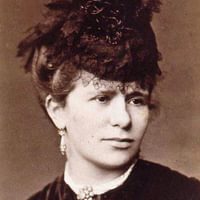
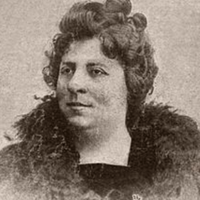
Hedwige Chrétien’s substantial corpus of compositions is increasingly being recognised for its elegance and craftsmanship. The scholar Florence Launay has brought much information about Chrétien to light. A contemporary of Debussy and Bonis, Chrétien was born in Compiègne in northern France. Her immediate family was not musical (her father was an engineer) but her maternal grandfather, Jules Ternizien, was a professional violinist. Her parents’ marriage ended in separation.
Chrétien began an extended period of musical studies at the Paris Conservatoire in November 1872, when she was thirteen years old. Her teachers included Louise-Aglaé Massart (piano), César Franck (organ) and composition and associated theory with Charles Lenepveu and Ernest Guiraud. She gained several awards and prizes from 1875 onwards, including for solfège, piano, harmony, accompaniment, counterpoint and fugue. In 1886 she won a prize from the Society of Composers of Music for a lyric poem L’Année and published her Grand Solo for tenor trombone and piano, the start of a lifelong interest in wind/brass instruments.
In 1887 Chrétien’s long period of musical study came to a close. She married a fellow-student, the flautist Paolo Agosto Gennaro. They had at least two children, Marcel and Cécile, both of whom became professional musicians. By 1890, Chrétien joined the staff of the conservatoire to teach music theory but resigned two years later to concentrate on her composition. Her marriage to Gennaro ended in 1897 and he was denied custody of their children. This led to a public scandal in 1901 when he kidnapped their son and attempted to murder Chrétien’s stepfather, a shocking event in an otherwise discreet life devoted to composition and teaching.
Chrétien wrote music steadily, producing approximately 250 works including thirty chamber pieces, orchestral works, comic operas and numerous piano pieces. From 1920, her interest in the organ revived and she wrote extensively for this instrument. During her lifetime, her music was known in France, England and the USA.
As a song composer, Chrétien produced over 70 mélodies; those currently known reveal a distinctive use of harmony and texture, as well as an imaginative and assured approach to writing for voice and piano. She favoured similar texts to her contemporaries, often hearkening back to France’s medieval past. Her Petits Poèmes du Bord de l'Eau (Paris, 1910) is a characterful and atmospheric set of six songs, lasting under eight minutes in total. Also of interest is her vocal chamber music, such as the duet ‘Nuit’, for vocal duet, violin and piano. Much of her music is held at the Bibliothèque nationale and, especially, the Women Composers Collection at the University of Michigan.
© Natasha Loges, 2026
Where can I listen to Hedwige Chrétien's songs?
Hedwige Chrétien is a featured composer on 'Compositrices: New Light on French Romantic Women Composers', released in 2023. Listen here on Spotify.
'Petits poèmes du bord de l'eau', recorded at the 2022 Spring Song Festival.
SCORES
Many scores for Chrétien's work are available to view here.
Song List
This list is likely to be of songs that have been performed at Oxford International Song Festivals and Oxford Song events, and may not be comprehensive of this composer's compositions. This database is ever growing as a work in progress, with further songs regularly being added.
| Fanatisme | Hedwige Chrétien |
| L'hiver | Hedwige Chrétien |
| L'ondine | Hedwige Chrétien |
| La barque | Hedwige Chrétien |
| La lune | Hedwige Chrétien |
| La rivière | Hedwige Chrétien |
| Les saules | Hedwige Chrétien |
| Petits Poèmes du Bord de l’Eau | Hedwige Chrétien |